

As part of Sisalwool’s support for Scotland’s Climate Week, we are looking at practical ways the construction industry can reduce waste, make better use of resources and create buildings that are fit for the future.
One important part of that conversation is the circular economy. Put simply, it means moving away from the traditional “take, make, use and throw away” model. Instead of treating materials as waste at the end of one use, the aim is to keep them in use for as long as possible…..repairing, reusing, recycling and repurposing them into something valuable.
At Sisalwool, this is not an abstract idea. It is built into the way we make our natural-fibre insulation…..here’s how….
Coffee sacks with a new purpose
One of the most visible examples is the humble coffee sack.
Coffee roasters receive beans in large sacks that are made to withstand a long journey, but too often have few options once they have been emptied. Rather than allowing them to be discarded, Sisalwool works with coffee partners to collect and reuse the natural fibres within them.
Moon Roast Coffee is one such partner. Its Director, Jo Coupland, explains:
“We’ve been working with Sisalwool for a couple of years now. Every single one of our used coffee sacks gets bundled up on a pallet and hauled across country to make insulation for housing. So many of these coffee sacks normally end up in landfill. At Moon Roast Coffee, they get a new lease of life. This feels great!”
It is a simple example of how collaboration can turn a waste problem into a resource. A sack that has already travelled as part of the global coffee supply chain can help form insulation used in a warmer, more efficient home.

More Than Recycling
The circular economy is not just about putting materials in a recycling bin. It is about thinking differently from the outset: choosing materials wisely, avoiding unnecessary waste, keeping resources in use and designing products with their whole life in mind.
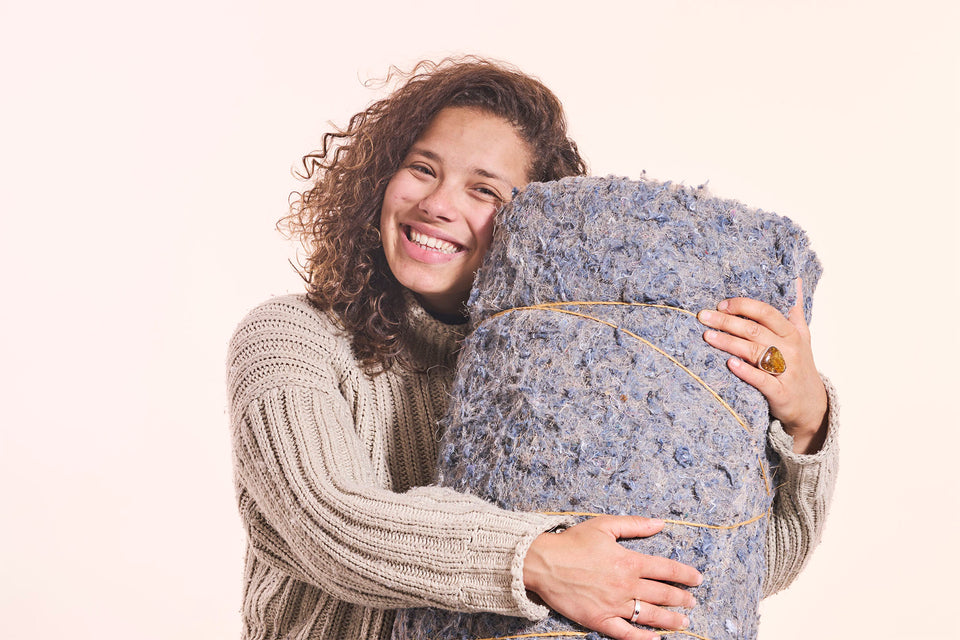
For Sisalwool, that means using materials that would otherwise be discarded, including sheep’s wool and textile-industry offcuts. The recycled content can of course mean that the appearance of the product changes slightly from batch to batch, but this is part of its character…far from a reflection of its performance. The fibres are selected and blended to create consistent insulation suitable for a range of new-build and retrofit applications.
It also means recognising the value of natural fibres. Sisal is a robust plant fibre; sheep’s wool has long been valued for its insulating and moisture-managing qualities; and cotton and denim offcuts offer a useful second-life fibre source. Together, these materials help create insulation that is breathable, able to support moisture regulation and designed to provide thermal and acoustic benefits.
A Practical Alternative
Sisalwool is designed as a lower-impact, natural-fibre alternative to conventional insulation materials, including PIR boards.
PIR remains a familiar material on many construction projects, but its price can fluctuate significantly, and it relies on petrochemical-based raw materials.
For homeowners, specifiers, builders and architects, this means the conversation is no longer simply about choosing the lowest up-front product price. It is about choosing the right material for the building and the long-term performance required.
As the cost of traditional insulation products, including PIR, continues to rise, natural-fibre insulation can make increasing economic sense as well as environmental sense.
Sisalwool products are designed for retrofit and new-build applications, and an independently registered Environmental Product Declaration (EPD) is available to help specifiers assess their environmental credentials.
The Bigger Picture
The construction sector has a major role to play in reducing waste and cutting carbon. Better retrofit will help existing homes retain heat and reduce energy demand. But the materials used in those projects matter too. Choosing reclaimed and renewable fibres where appropriate can help reduce dependence on other resources.
Sisalwool does not claim that one product can solve the challenge on its own. But we do believe that every material choice is an opportunity to do better.
By turning coffee sacks, textile offcuts and sheep’s wool into natural-fibre insulation, we are helping keep valuable resources in circulation and helping create warmer homes from materials that might otherwise have been thrown away.
la colección de lana de sisal
¿Interesado en utilizar Sisalwool?
No te culpamos. Explora el catálogo completo hoy mismo.


